
Online gambling faces fresh restrictions
We use the Financial Action Task Force (FATF) framework to identify sector specific risks and threats to operators. Our risk assessment is developed in partnership with sector specialists, including law enforcement, such as the National Crime Agency (NCA). As outlined in the consultation, the fees payable for gaming machine notifications and gaming machine permits are not in scope of this review. We will keep the 15% increase in fees under review to ensure that its impact is proportionate both to the funding requirements of licensing authorities and the financial pressures placed on operators.
The increase in Category B machines will enable bingo halls to better meet customer demand and will likely result in greater GGY. This would result in an overall decrease of over 900 cabinet machines across these venues, predominantly consisting of legacy Category C cabinets. Also, Category C and D gaming machine device types made available for use must be of similar size and scale to Category B. For example, some options may place further emphasis on achieving commercial flexibility than achieving customer choice of higher and lower staking machines, and vice versa. Gambling Commission data, from April to September 2019, indicates that across all land-based sectors, 1.8% of Category B sessions result in a loss of £200 or more.
- For two key proposals where we have not been able to quantify the impact due to limited evidence, we have made reasonable inferences instead.
- We deposit, we play, and we judge based on actual experience.
- The Gambling Act Review white paper published in April 2023 set out the government’s plans for modernising the regulation of gambling in Great Britain.
- This view was most strongly argued by licensing authorities.
- If a casino breaches the rules and you are affected, complain to the casino first.
The majority of responses were in favour of mandatory limits being a required feature on machines accepting direct debit card payments. We think that the requirements of account verification, transaction limit, and deposit limits, alongside a minimum transaction time will provide appropriate safeguards for these lower stake machines. The pub sector argued that it would be disproportionate, cost-prohibitive and unlikely to be achievable on these types of machines. We are also proposing that this minimum transaction time applies to all machines. Category D machines do not have a committed payment limit.
Having worked closely with the Gambling Commission, we consider it necessary to put new obligations on operators to conduct checks to understand if a customer’s gambling is likely to be unaffordable and harmful. Operators are already required to identify customers at risk of harm and take action, but there have been too many cases of interventions coming too late, or in some cases not at all. We will also develop independent messaging that raises awareness of the risks of gambling harm while helping to remove the fear of stigma that stops people coming forward for help. At the heart of the new regime are tougher affordability checks, a mandatory 1 per cent levy on operators to bankroll harm research and treatment, and sharper design limits for online slot games. In January 2020, the Gambling Commission approved several organisations for these compulsory funding contributions, ensuring that operators direct their financial support to recognised entities working to mitigate gambling harms. The UK Gambling Commission requires operators to contribute financially to organisations focused on research, prevention, and treatment of gambling-related harm.

This section of the consultation received 46 responses, primarily from licensing authorities and gambling operators. In contrast, most industry responses were concerned that customers may use this information to incorrectly determine that a machine is due a pay-out and therefore could lead to people spending more on a machine. Most responses in favour of implementing these features on machines were in agreement with the rationale outlined in the consultation that it would help customers to make more informed decisions and keep track of their spending.
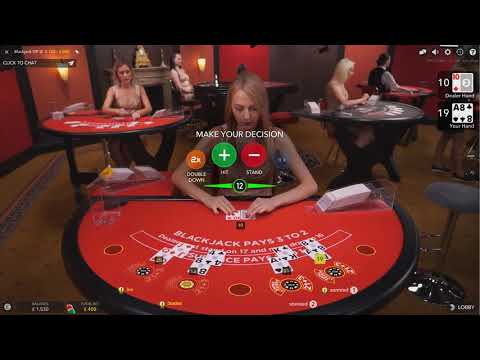
The Gambling Commission will review and consult on updating design rules for online products, building on its recent work on online slots to consider features like speed of play which can exacerbate intensity and risk. In general, this government agrees with the principle that people should be free to spend their money how they see fit, so we propose a targeted system of financial risk checks that is proportionate to the risk of harm occurring. Gambling can also contribute to tourism, for instance to seaside towns across the country, or high-end casinos attracting wealthy overseas visitors who spend across a number of other sectors while in this country. The gambling sector also contributes significantly to other industries, including sport, advertising and racing. There are also benefits to gambling which should be weighed in decision making, although they do not negate the need to prevent gambling-related harm.
To further raise standards, a more prescriptive and risk-based model will be introduced, where remote operators are required to investigate the customer’s financial circumstances in response to certain loss triggers to understand if their gambling is likely to be harmful to them. However, while these tools are helpful for many online gamblers, they are not enough to fully mitigate the risks, so there are also a range of obligations on operators to identify and prevent gambling-related harm. All online play is account-based, and recent years have seen significant strides in the development of harm detection algorithms which monitor every aspect of a customer’s gambling to spot signs of risk and trigger interventions without human input. The proportion of people suffering harm might also be identified through other sources such as bank transaction analysis, hospital admission data, and operators’ own harm detection algorithms which flag the customers displaying indicators of harmful gambling. It also gives the Secretary of State the power to update specific provisions (such as the maximum stakes and prizes for gaming machines) and to set licence conditions via secondary legislation. A key concern for some of the land-based sectors is the ban on direct use of debit cards on gaming machines and we recognise that substantial changes are happening to how payments in society are being made.
As set out in section 151 of the 2005 Act and in the Gambling Act 2005 (Premises Licences and Provisional Statements) Regulations 2007, the operator will also need to submit an up-to-date plan showing their table gaming area, other gambling areas and non-gambling areas. Respondents pointed to the need for authorities to undertake appropriate licence checks, and therefore it is essential that operators are transparent about any changes of circumstances. This will enable casinos to meet customer demand sites not on gamstop and bring Great Britain’s casino product offering more in line with international jurisdictions. They did however indicate that the presence of sports betting in venues would likely lead to an increase in revenue from non-gambling products such as sports bars.
We propose to introduce a maximum stake limit for online slots games of between £2 and £15, subject to consultation. Products which are safer by design will help prevent harm at source and reduce the reliance on reactive harm detection systems. With new technologies and payment regulations now in place, the Commission will work with others to consider what more can be done to reduce this risk.
Under the old rules, some casinos imposed requirements of 40x, 50x, or even 65x. 10x bonus wagering cap — casinos can no longer impose wagering requirements above 10x the bonus amount on any promotional offer. Affordability checks — casinos are required to conduct financial vulnerability checks on players reaching defined net-loss thresholds within a rolling 30-day period. Autoplay ban — all UKGC-licensed casinos must disable autoplay features on slot games entirely. Here is a summary of the six most important changes now in force at every UKGC-licensed online casino.
It is likely that gaming machine GGY, which was £1.8 billion in 2022, will continue to diminish if gaming machines are not able to offer cashless payment methods. We also look at the impact of removing the prohibition of the direct use of debit cards on gaming machines once increased player protections are approved and mandated by the Gambling Commission. However, the industry has stated that their research indicates a strong customer demand for betting facilities in casinos. The few casinos which already offer sports betting have derived 0.2% of their GGY from this source in the past but the latest data shows that it accounts for 0% of their GGY. The estimate is formed using published accounts of operators and Gambling Commission data about existing machine uptake and casino floor space utilisation.
The Commission updated its ‘available for use’ guidance to highlight that gaming machines should only be counted as being available for use if each machine can be played simultaneously by different players without physical hindrance. The Gambling Commission, however, has pointed to concerns that the industry is intentionally subverting the 80/20 rule for machine games and expressed doubt as to whether some machines represent a genuine commercial offer to customers. Up to 20 percent of total gaming machines can be Category B. This rule mandates that at least 80 percent of all gaming machines in Adult Gaming Centres (AGCs) and bingo halls must be Category C and D. We would like to make the process for taking up the entitlement of additional machines as simple as possible for both operators and licensing authorities. What player protections could be adopted in casinos for those customers participating in sports betting?
Slot Stake Limits
Not to mention lottery scams and propaganda on how gambling is an immoral act (this played on the religious community). There were multiple betting fraud cases in the early 1800s that left a negative taste in people’s mouths. The government seemed to tolerate betting amongst the upper echelon of citizens while enforcing the lower class. Its heyday was in the Industrial Revolution era and came through horse race betting and small-time games played in local pubs. The history of gambling in the UK can be broken down into class warfare.
Customer Support – No Robots Allowed
The Act initially covered gambling offered in premises based in Great Britain and also remote gambling offered by GB-based operators. To increase their confidence in using these powers, we will align the regimes for alcohol and gambling licensing by introducing cumulative impact assessments when Parliamentary time allows and will consult on increasing the maximum fees they can charge for premises licences and permits. While most age-restricted products including gambling are permitted from age 18 in this country, there is evidence that young adults (such as those age 18 to 24) may be particularly susceptible to gambling-related harm. The Commission will become a more proactive regulator and it will now start building the capacity to require and analyse more data from online operators to identify non-compliance with licence conditions.
In spite of this action and the Commission’s stated expectations, some respondents complained that operators made withdrawing money from accounts unnecessarily difficult and subject to artificial delays (especially prior to the Commission’s ban on reverse withdrawals) which do not apply for deposits. Further concerns were raised in areas where the Gambling Commission has previously taken action, including rules around the timeliness of requests for identity documentation. For example, while operators are required to disclose key information on their products, a recent study examining 350 roulette games offered by 26 major operators suggests this can be very onerous for users to access in practice. A reasonably widespread concern in call for evidence responses from consumer groups and private individuals was that friction is unequally distributed across the customer journey in a way that can disadvantage consumers. Such transparency supports consumer confidence in a fair and open market, and should not bring new costs to the industry or consumers. We are reinforcing existing expectations concerning the need for operators to provide clear and transparent terms of service to consumers.
Free-to-play casino games with prizes are regulated by the Gambling Commission (licence required). The Gambling Commission has a range of powers, including the ability under the Gambling Act 2005 to investigate and bring prosecutions against those that provide unlicensed gambling facilities to consumers in Britain. The legal approach is to completely criminalise gambling but then to make exceptions for persons who comply with the licensing regime, pay the applicable tax, observe the applicable regulation and so on.
The Local Government Association response stated that there are cases where a licensing authority would like to place further limits on machines in venues but are prevented from doing so (such as in a licensed bingo premises in an area of economic disadvantage). The Bingo Association has provided evidence to show that machines are not the main attraction for customers visiting a retail bingo club. The Gambling Act 2005 does not currently allow for pilots of new machine games that would be inconsistent with legislative provisions on stake and prize, and does not allow for any sub-divisions of Category C gaming machines (unlike Category B machines), which some of these concepts could require. While we are mindful of the potential harms of new machine products, we acknowledge that these may be substantially theoretical until evidence is obtained on their practical risks. The Commission’s advice also noted that enabling such a concept on Category C machines could potentially lead to a £10 stake gaming machine being made available in alcohol-licensed premises such as pubs, outside of the regulatory ambit of the Commission.
We think that this will create greater equity between 1968 Act and Small 2005 Act casinos and should not have an effect on gambling-related harm as customers will still be offered a mixture of gambling and other non-gambling leisure activities. This restriction, alongside requirements for non-gambling area, will only apply to those 1968 Act casinos that decide to exercise the enhanced gaming machine entitlement. We are also consulting on whether the maximum size of a 1968 Act casino’s gambling area must – like that of a Small 2005 Act casino – be less than 1,500sqm, if it resolves to exercise its entitlement to more than 20 machines (including at least one Category B machine). Only casinos that have a gambling area of 280sqm or more will be eligible to access the enhanced gaming machine entitlement.
The Social Market Foundation reported that research by Morgan Stanley estimated that a flat £2 stake limit for all non-slot casino products would reduce GGY from those products in the licensed sector by 92%. Furthermore, stake size can have a more direct functional role in non-slot gameplay compared to slots, for instance in roulette where a higher stakes bet can be divided between different areas, modifying the rate of return to the player and the risk of losses. On that basis, we will also consult on measures to give greater protections for 18 to 24-year-olds who the evidence suggests may be a particularly vulnerable cohort. However, taking an equitable approach to product regulation should take account of the wider system of protections in place online. Given wider forthcoming changes to the account-based protections considered above, we do not consider that such customer segmentation is yet a sufficiently established safeguard to control access to higher stakes. Operators which heavily weight their risk score by stake size were deliberately excluded from the analysis to avoid giving a false impression of a positive linear correlation.

The primary and intended benefit of this measure is to increase funding for licensing authorities to carry out administrative and enforcement duties in relation to land-based gambling premises in their remit. A premises licence is required to operate a non-remote premises-based gambling business. To support their role, licensing authorities collect premises licence fees for applications and annual renewals to cover the cost of administration of their gambling duties and gambling enforcement. While the Commission licenses operators and individuals, local authorities in England and Wales and licensing boards in Scotland license premises and have the power to place conditions on premises licences as well as to grant or refuse them. Further research finds evidence that there is a correlation between the recollection of playing Category D machines in childhood and adult disordered gambling, although causation cannot be shown. Bacta, which represents the amusement and gaming machine industry in the UK, have an existing voluntary commitment for their members to ban all under-18s from playing Category D ‘cash-out’ machines.
We also acknowledge the costs, not only of servicing the older Category C and D machines, but also in making (predominantly unused) Category C/D machines available to meet ratio requirements. The Commission’s advice is that the government should always ensure there are clear rules or measures in place that ensure a balance of higher and lower stake machine games is always available in high street venues to provide genuine customer choice and allow for lower stakes gambling. Operators have also highlighted the energy and operating costs of machines, noting that older machines are less likely to be energy efficient and more likely to break down. It pointed to research from 2016 which found that 28% of patrons of retail bingo clubs who visited at least once a month played fruit or slot machines and the majority of those who played these games did so for less than 30 minutes. While machines have always been allowed to have multi-stake options, in practice, most earlier machines had a set fixed stake.
For operators, they establish higher compliance standards and greater accountability. The UK operates strict gambling frameworks, with the UK Gambling Commission charged with protecting players & ensuring market integrity. It is important to note that illegal gambling activities may not be safe in the UK.
Through developing their policy statements, licensing authorities are able to set out their ambitions for gambling in their area, and this in turn informs how they assess and decide applications for new gambling premises. As set out in detail in section 6.1, licensing authorities have a wide range of existing powers in regards to both gambling premises licensing and planning applications. Applicants must consider what measures the gambling operator can put in place within a GVZ to ensure that specific risks within the zone will not be exacerbated by the operation of the gambling premises.
Please upload any further supporting evidence that you wish to share. The Department for Culture, Media and Sport will have due regard to the public sector equality duty, including considering the impact of these proposals on those who share protected characteristics, as provided by the Equality Act 2010. What do you think are the potential impacts of raising licence fees on the local area? Are there any functions that local authorities/ licensing boards do not exercise at present, but could if fees were increased (e.g. a more proactive enforcement policy)?
Commentaires récents